Hospitals Have an Image to Uphold, Too

The image that a hospital creates for itself is actually super important, even though it’s not something that we usually think about. There are hospitals that have religious affiliations, clinics like Planned Parenthood that deal with touchy subjects, and a bunch of other subsets of medical organizations that use the cultivation of their image to keep patients and attract new ones.

Image by Serena Wong on Pixabay

I came across some news today that will be interesting to discuss in regards to PR. Essentially, Providence Behavioral Health Hospital, which is owned by a chain called Trinity Health, announced that it will be discontinuing inpatient psychiatric services in June 2020 due to a shortage of psychiatrists. The Massachusetts Nurse’s Association (MNA) spoke out about this decision here, and not positively.

“Trinity Health’s decision to discontinue our mental health beds puts our communities at risk,” said Cindy Chaplin, RN at Providence and a member of the MNA. “When everyone else in Massachusetts agrees we should be making it easier for patients to get high-quality mental healthcare, Trinity is going in the opposite direction.”

Ouch. That’s not good for their image… Especially coming from an employee.

Because Trinity Health released their statement today, there’s not much else being said (yet) on the subject.

It’s unfortunate for Trinity Health to make this decision during a time of heightened awareness of mental health in the state of Massachusetts. The governor and other state lawmakers have been advocating for legislation that will provide more access and funding to mental healthcare programs.

Instead, this decision will limit access to mental healthcare.

Because of all of these factors, Trinity Health should prepare themselves for a lot of backlash about their decision. The MNA has already responded, and I would bet that this will catch the attention of the state governor. Also, citizens in the surrounding areas will be affected by this decision, and will likely start discussions on Facebook and other mediums.

This is a tough one for Trinity Health’s PR team. If they’re being honest about not having enough psychiatrists (and have done everything they could to prevent this from happening), then they’re going to have to deal with the bad press and the rumors for a while. They might consider releasing another statement that gives their apologies, because their current one does not do this.

They should also consider being open to answering questions from the MNA, reporters, and politicians. Doing so will show the public that they do care about this decision and the effects that it will have on the community. Transparency is often key in maintaining a good image during a time of crisis, and it’s no different for a hospital.

Discussing this with the MNA is especially important, because, like Cindy Chaplin, many nurses that work at this location are also members. If Trinity Health wants to maintain a good relationship with their employees (which should always be one of the top goals of a company), then they need to work on persuading the MNA that their decision was necessary and that it was the last possible choice.

It will be interesting to see how this plays out. I plan to keep tabs on this story and see if any of the predictions or suggestions that I made come true.

Your Girl Made Her Own Infographic

Yes, I did. And (spoiler alert) they’re not as easy as they look.

Last week I wrote a post about how important infographics can be for companies to communicate important pieces of boring data in a fun and creative way. If you’re interested, you can read that post here.

Today, I’m going to discuss my own experience with creating an infographic. I created this one for a class, so we’ll see how well I actually did after it’s graded… hehe.

Even though I know that my infographic skills are not the best out there, I learned a lot about the process of making one that I thought I could share with you.

Image by Mudassar Iqbal from Pixabay

The preliminary things that should establish before you continue on to the steps below include your topic and your target audience.

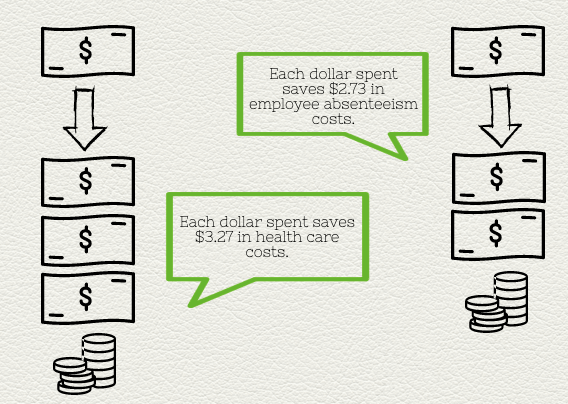
I’ll use mine as an example. I used my infographic to show how important corporate wellness is (for companies and employees), because, well, I care about wellness and I think that everyone would benefit from having more opportunities for wellness at work.

My target audience? Business owners. Why? They’re the only ones who can really make a change. I could have targeted employees, but the odds are that they can’t do much with this information.

STEP 1: Find your data

You want data from peer-reviewed articles with legit research. This would be a million times easier if you’re working for a company who has collected the data themselves.

It was hard to find data for my subject. There’s been plenty of research on it, but most scholarly articles require you to buy the report that has the information you need, and I’m a broke college student, so… That wasn’t happening.

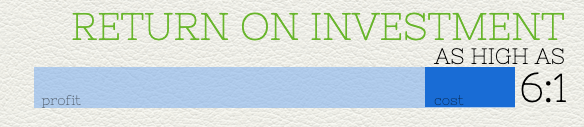
I did a lot of digging. The best thing that I can tell you is to be specific in your Google searches. I narrowed down the data I wanted to find to three main things — increases in employee productivity, return on investments for companies who have wellness initiatives, and the decrease in employee health risks — and then googled those specifically. Only then was I able to find articles that worked.

step 2: make an outline

How are you going to make the data you found visually interesting? Think this through before starting your design. Throwing out a bunch of big numbers and adding a pretty color scheme won’t do the trick. You’ll need to find ways to make the data easy to understand in a visual format. It’s okay to use a couple big numbers, but try to limit that as much as possible.

This can be difficult, too. Some of the data that I found was hard to show visually. Sometimes, you’ll be able to use something as simple as a pie chart or bar graph. I wasn’t that lucky, so I had to get creative. Here’s a couple screenshots of what I did:

I created each of these using graphics on the site I used (called Piktochart) instead of a pre-made chart or graph.

step 3: design

You can learn all about basic design principles here. I’m no expert at it, but I had the most fun with this part. Once you finish the other two steps, it’s easy to create a simple and clean-cut infographic.

The last tip I have for you is to use your design to tell a story. It’s an abstract concept, and this was hard for me to do with my particular subject. To be honest, I’m not confident that I did this part well. However, it’s important to keep storytelling in mind while creating your infographic. People love stories, so if you can find some way to accomplish that in your design, then do so.

Yes, This is About My Favorite Ice Cream

CAUTION: pictures of delicious goodness ahead!

Ugh. Sorry if you’re craving ice cream as much as I am now.

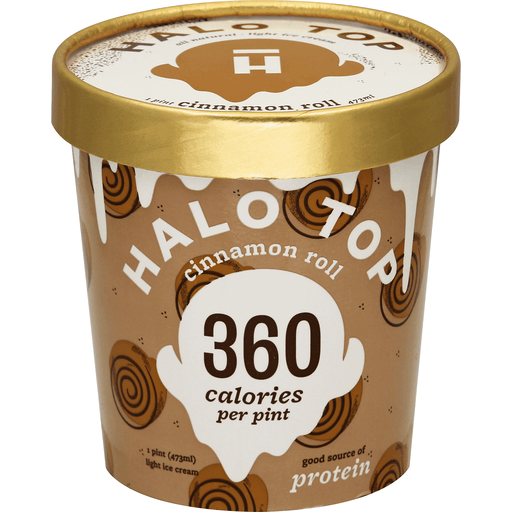
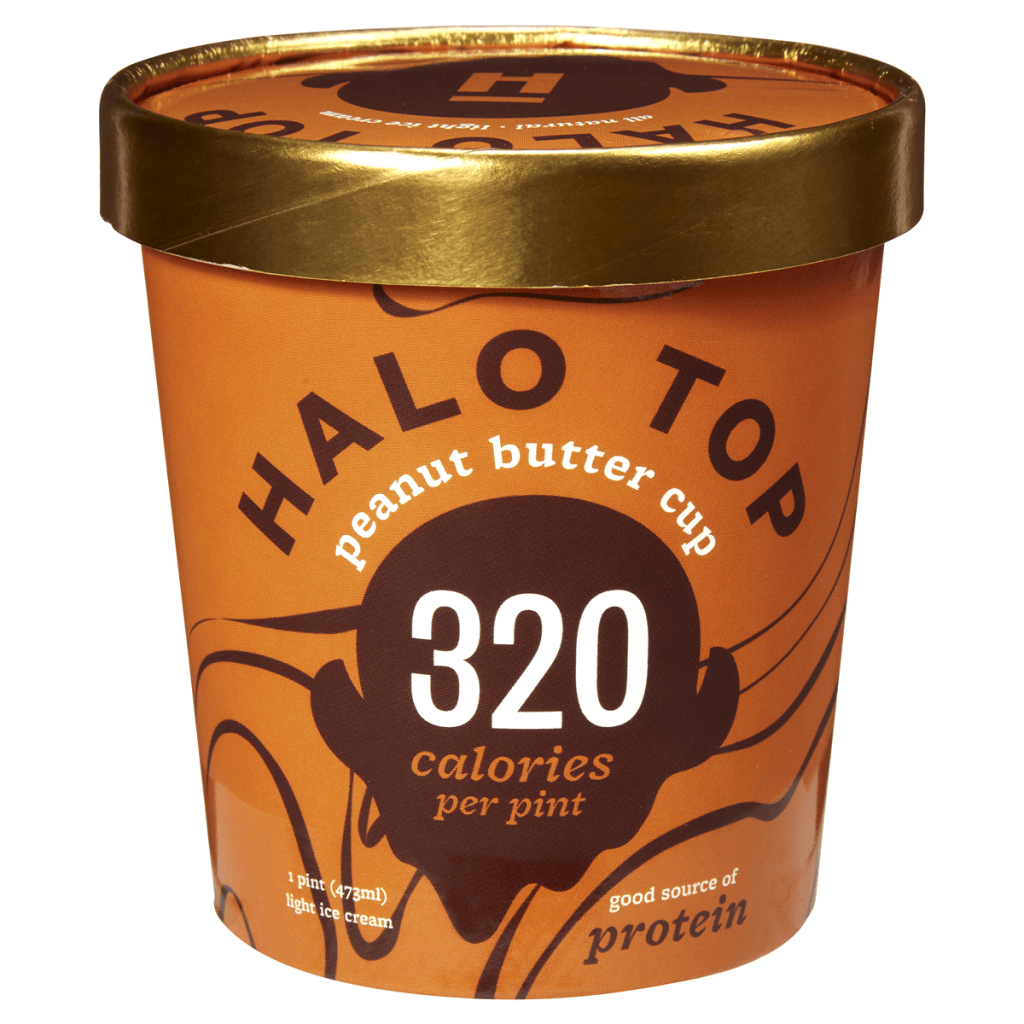
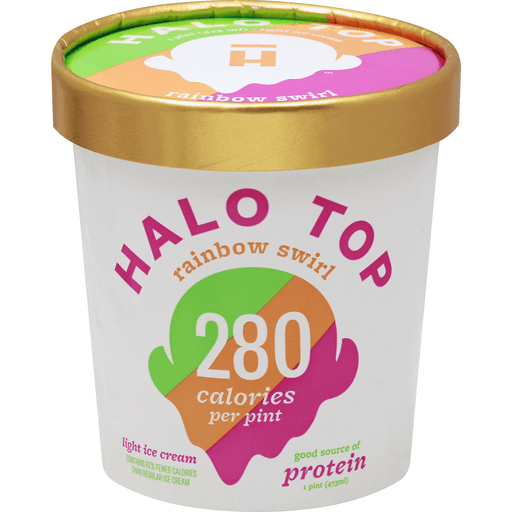
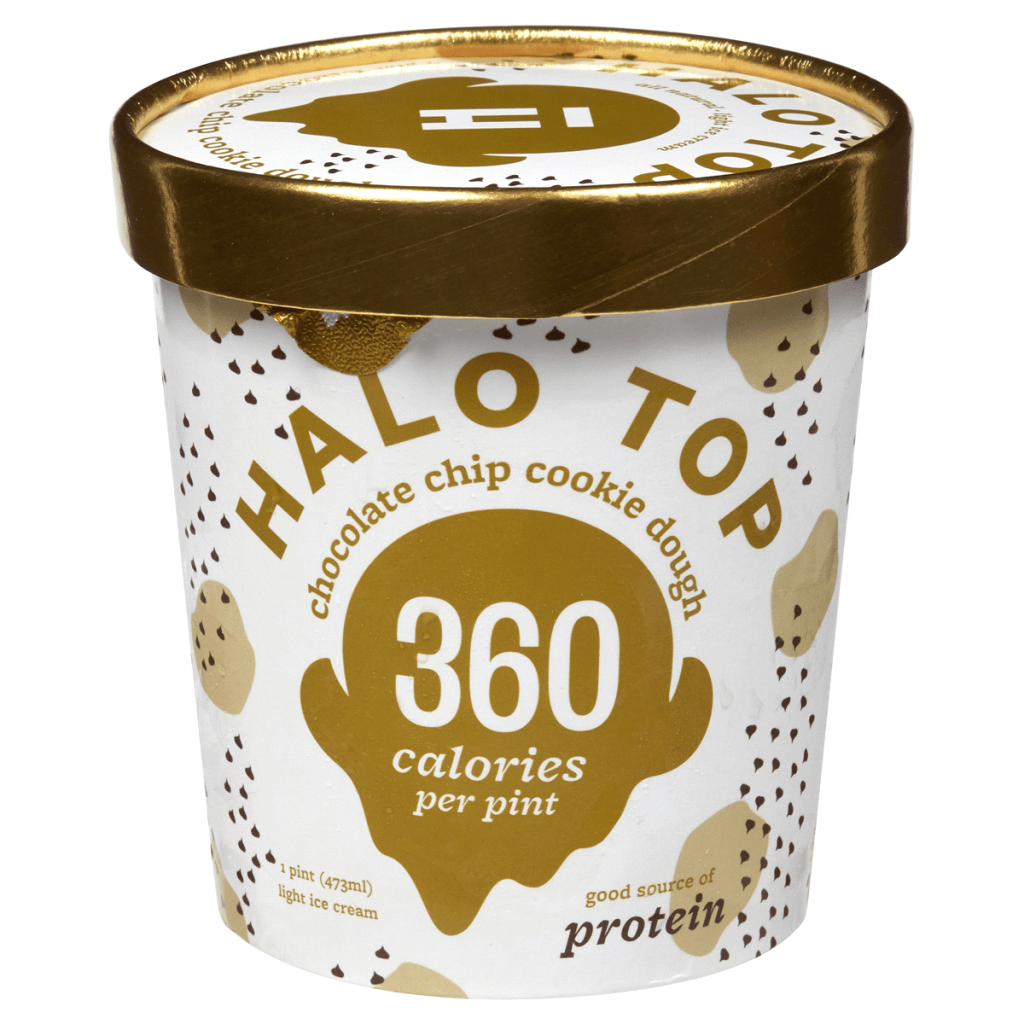
Halo Top has become one of the top ice cream companies in the U.S., and if you’ve had it, you know why; it has great taste, a large variety of flavors, and the calories of a pint are lower than the calories of a single serving of regular ice cream (and who eats only one serving?).

However, it became more popular than other low-calorie ice creams because of its unique advertising schemes.

Underneath the lid of every pint is a quote that essentially says the same thing (just in a hundred different ways): eat the whole pint, ’cause it tastes good and you don’t have to feel guilty about it. Plus, as you can see above, every single pint is advertised with a huge number to remind customers just how low-calorie it really is. The company doesn’t sell anything larger or smaller than a pint of their ice cream, because that would take away from all of the branding that they have established.

It’s genius, really. So genius that people will spend $5.99 for a single pint and eat it in one sitting.

After that? Well, they go and buy more.

Halo Top knows this. If they remind you time and time again that eating the whole pint is only so many calories, then heck, you’re going to eat it all! It’s fun. It’s like being given permission to eat an entire bag of chips or a pack of Oreos.

Also… Each pint reminds you, the consumer, that it has a “good source of protein”. It almost makes me laugh, like Halo Top is something that you would eat as a meal. I mean, how often do you look for the amount of protein in your late-night snacks?

The thing is: this works for the brand! Halo Top’s target audience is people who are trying to lose weight, or at least watch their calorie intake. Those same people are also probably focusing on foods with protein because, well, protein makes you full and builds muscle (among many other things). The great thing about Halo Top’s statement is that it’s so clearly ambiguous. A “good source of protein” for me means something completely different to another person.

But, when you’re searching through the frozen aisle craving some ice cream, and you see that statement along with the amount of calories, it feels like a win-win.

Now, whether or not Halo Top is actually healthy, and the fact that it is preying off of America’s unhealthy diet culture is something that I won’t talk about here. As much as I love this product, there are other interesting discussions we could have about some of the not-so-great stuff that it’s doing (perhaps unintentionally). I encourage you to read this article if you want to know more.


Use this post as yet another reminder that Halo Top, and every other company, do all of these things on purpose. Every word on their product/website/poster/commercial is no accident. They are communicating with you (the consumer) strategically, so that you will buy their product or believe their story.

Data is Boring…

…Unless you include pretty pictures!

Many organizations use infographics to tell their important data, because that’s the only way they can get people to actually pay attention. If done successfully, infographics are an awesome tool for organizations that use a lot of numbers and data to sell their product or raise awareness about something. Data is (obviously) important — it tells us how society behaves in a million different ways.

The problem with data is that, unless someone is purposefully looking for it, no one wants to read it. It’s usually boring, or explained in a way that’s hard for people to understand. And, with the rise of technology — with which we are constantly being bombarded by information — and increasingly short attention spans, it can be hard to get people to pay attention.

I mean, seriously, guys. Studies show that humans have an average attention span of eight seconds. That is a big yikes for companies who want your attention.

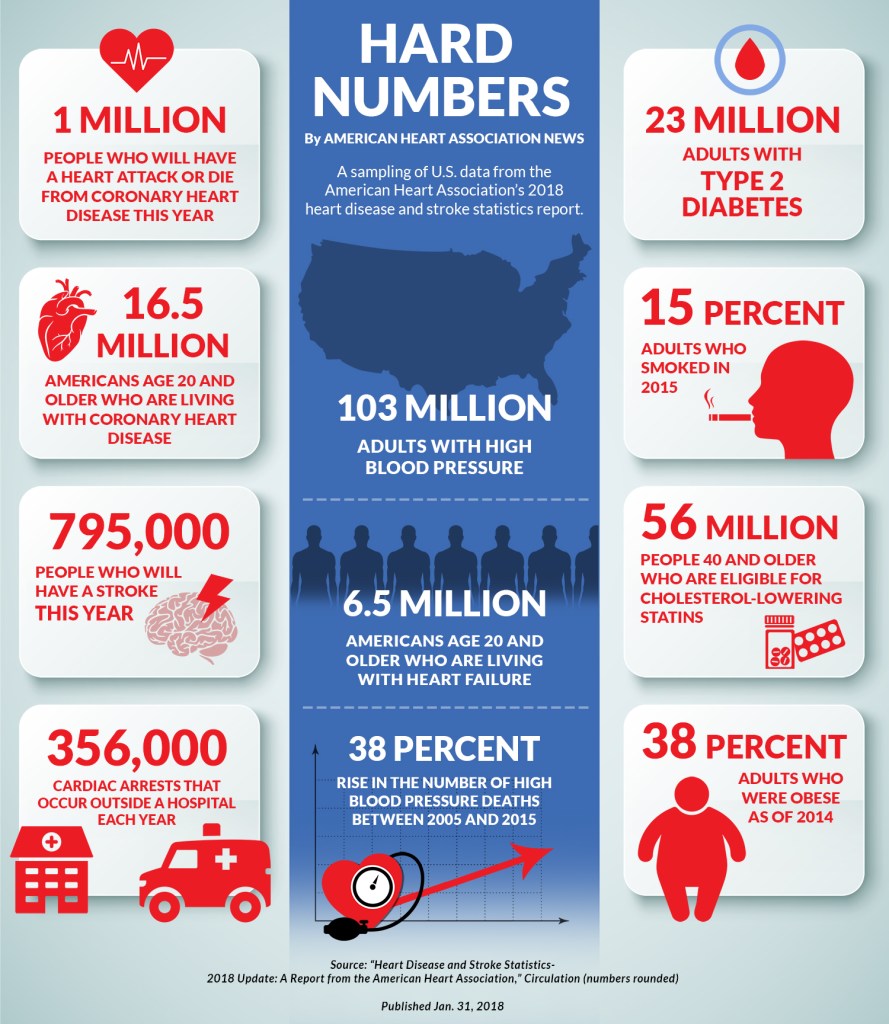
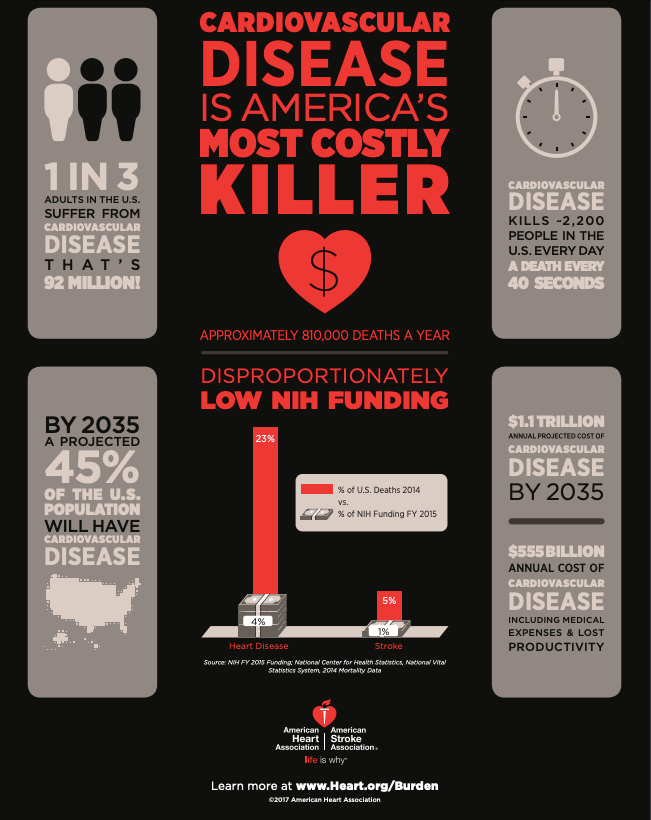
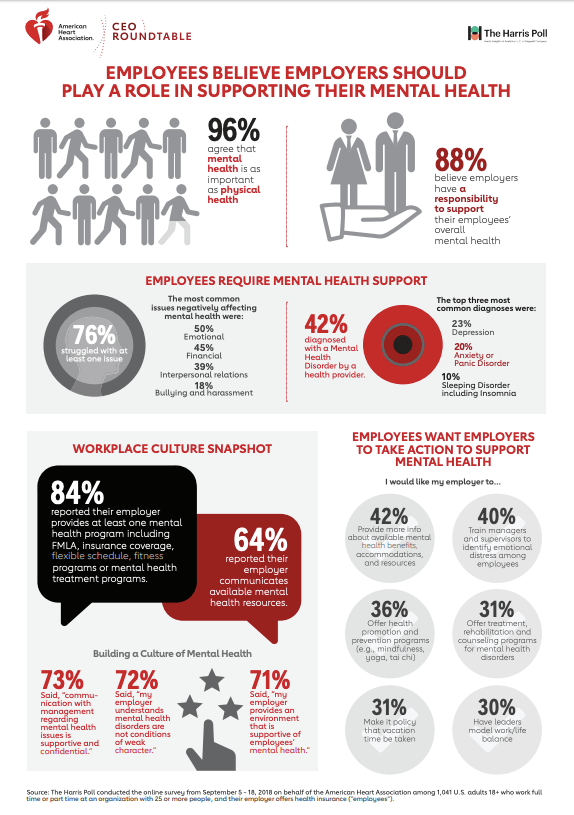
National organizations like the American Heart Association (AHA) are big on numbers. Being skilled at creating infographics is important for them. The AHA uses them to inform the public about a lot of important data, and they are quite successful at it.

https://healthmetrics.heart.org/reading-poster-brochure-cover-template/
https://healthmetrics.heart.org/cardiovascular-disease-is-americas-most-costly-killer/
https://healthmetrics.heart.org/aha_2018_harrispoll-hi/

Pretty good, right? They have an entire page on their site dedicated to their infographics. Check it out here.

Infographics allow AHA to include visuals, nice color schemes, and design to otherwise dull (but significant) data. This is also something that I’m 99.9% sure AHA will send to hospitals and other partners to use as posters in their clinics. Something like this is far more eye-catching than a piece of paper with printed numbers on it in 12-point Times New Roman font.

The pros of using infographics?

  • If they look nice enough, they will make your organization look more professional.
  • They can be memorable.
  • They will attract people to read and understand your important information.
  • They will attract new audiences.

What is this — using infographics — called?

STRATEGIC COMMUNICATION!

Woot woot! That’s what PR is all about. AHA is trying to communicate their data with old and new audiences through the strategic use of aesthetically pleasing visuals.

So, next time you see an infographic that catches your eye in the school hallway, on TV, or on your local bulletin board, you’ll know what that company is doing. And, you can give them an imaginary high-five for being successful at causing you to stop and look for a moment.

Choices, Choices…

Okay, people. I’m veering a bit off topic today, because I want to discuss one of my other favorite topics: animals!

Side note: are you wondering how I could possibly have so many favorite things? ‘Cause I am.

Anyway, I wanted to do a little comparing and contrasting for the advertising options that animal shelters have, and discuss how each kind can affect the reputation of a shelter. Do you remember that one commercial from a few years back from the ASPCA? The background song was like, “In the aaaarms of the angels…” and it made everyone want to cry?

Here’s a little refresher:

Courtesy of Michael Bates on Youtube

Remember now?

The interesting thing about this commercial is that nearly everyone who watched regular television back when it debuted remembers it to this day. It was so heart-wrenching to watch that people simply can’t forget it. I don’t know if it was necessarily the “first” of its kind, but it made such an impact that it sure seems like it was.

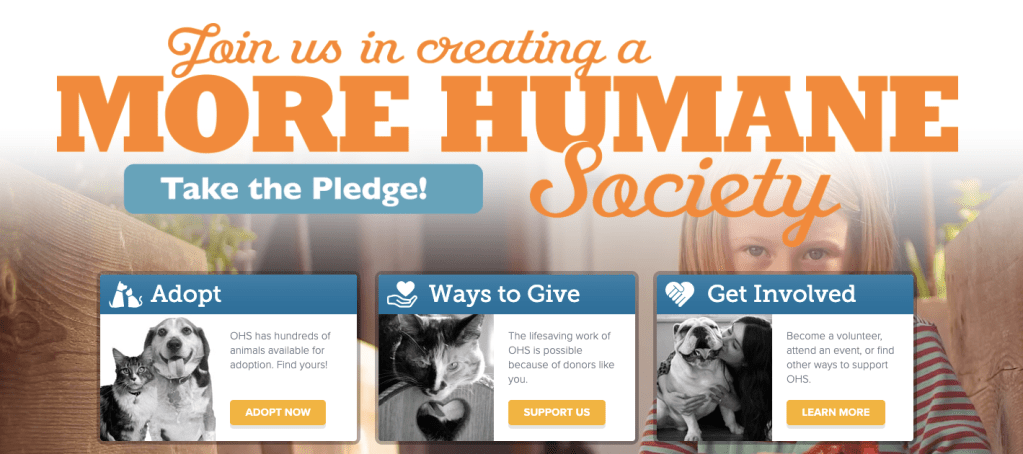
So, my question is: is that the best way for an animal shelter to ask for donations? Obviously there’s other avenues. I recently researched a nonprofit called the Oregon Humane Society, and they actually limit their advertising of abused and neglected animals as much as possible. Instead, they did the complete opposite; their website is full of pictures of happy animals.

From Oregon Humane’s website

This is a screenshot of Oregon Humane’s homepage, just for comparison purposes. If you delve deeper into their website, you’ll see the same overarching theme of happy animals — not sad — even though the two organizations do much of the same work.

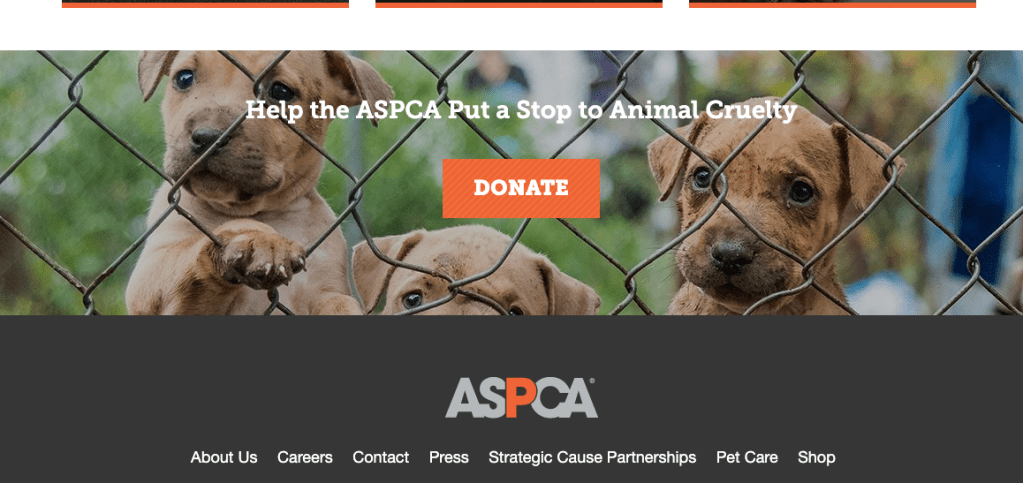
Which is more effective? Is it better to have a commercial that makes everyone want to cry and/or look away? Or, is it better to show animals enjoying their lives after being saved? ASPCA made something that people can’t forget, but is that memory a good one?

The ASPCA may not have meant to do this, but the reputation that they created for themselves is rather negative. I don’t mean that they did something wrong in the making of that video, but they caused society to feel sad when thinking about their organization. They’re keeping it up, too. A look at their website shows many pictures of animals behind bars.

Meanwhile, Oregon Humane Society focuses on telling the happy stories of animals. They do speak out about some abuse/neglect cases, but that’s not their entire focus. You can leave their website feeling happy.

Doing a little research tells me that in 2018, the ASPCA received over $100 million in donations. The Oregon Humane Society received over $12 million. Now, we’re talking about a national versus state organization. But, it’s interesting to look at the differences there. What if the Oregon Humane Society was national, and it received $12 million in donations from every state? Just a thought.

I don’t know if donations would increase or decrease for the ASPCA if it approached advertising with a bit more positivity. However, I do know that they’re known for making people feel sad. And my personal experience with the Oregon Humane Society’s advertising approach is that it makes me feel happy.

It’s up to personal discretion which way is “better”, but personally, I think it’s better to make people feel positive about the work that is being done to save the animals.

Another Good ol’ Social Media Talk

Image by Tanja Cappell on Flickr

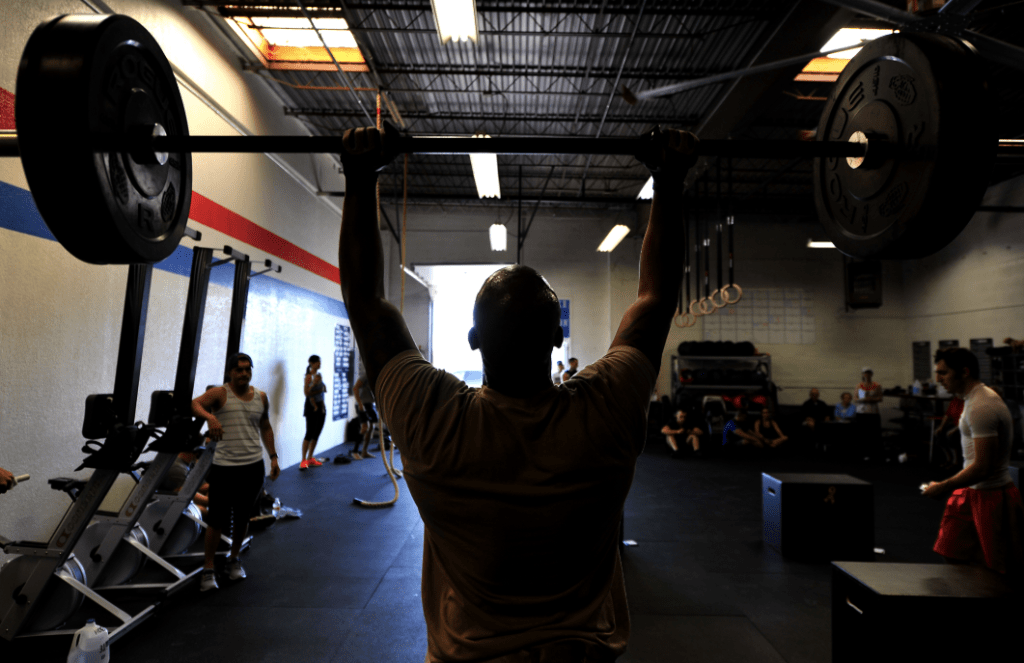
Social media has changed the fitness field immensely. I guess it’s not necessarily social media itself; it’s the way that people have used it as a platform for their fitness pursuits that has really changed the game. There are always pros and cons, though… Let’s check some out.

The cons

I’m just going to come right out and say it: a LOT of those people (you know, those influencers?) didn’t actually gain that body from the gym. Sure, there are definitely a good amount out there who have worked hard for that toned bod, and you can usually tell who that is. Now, I am in no way trying to downplay anyone’s successes. I’m just highlighting the fact that our expectations of our bodies (both men and women) and what we will achieve from fitness have been extremely skewed by all of the people out there who were blessed with good genetics and say it’s because of fitness.

I know this, because I’ve been through it. I still struggle with it. Everyday, I go on Instagram or Twitter, and see hundreds of people with society’s idea of the “perfect” body. When I began my fitness journey, I was expecting that my body would transform into what they had, because, “hey, working out did it for them!”

Wrong.

I have grown muscle, gotten stronger, lowered my resting heart rate, and lost weight because of working out — all GREAT things! But the tiny waist, flat tummy, and huge butt? Nope. And a lot of my expectations are not going to happen, because I don’t have the same genetics as those people. And that’s okay!

The point is: social media has given rise to unrealistic body standards. Yes, this was a problem far before Instagram. It’s just gotten worse. Every time that you open one of those apps, you are subject to seeing it, whether you want to or not. Before, you had to go to the store, buy a magazine, and choose for yourself what you wanted to see.

That’s not all. Technology has also made it easy for those people to make a profit. I can’t tell you how many people I’ve seen selling workout plans, and their followers will buy them because they believe it will make them look like that person.

It’s extremely important to exercise and eat healthfully, but it’s dangerous to fall down the rabbit hole of only doing so because you want to look like someone else. That will only lead you to disappointment — you cannot expect your body to look like anyone else’s but your own!

You are beautifully unique, and the other benefits that you will gain from being healthy are far more important than having a big butt.

THe pros

The great thing is, if you are aware of what I mentioned above, then you can use social to find some incredible people that will make you feel good about your body and your unique fitness journey.

Here are some of my personal favorites on Instagram:

  1. Kelsey Wells @kelseywells
  2. Mik Zazon @mikzazon
  3. Kayla Itsines @kayla_itsines
  4. Chessie King @chessiekingg

Once you’ve found your own favorite people, social media can become a great place for spreading positivity and self-love. It can also serve as a platform for you to learn about nutritious foods, new workouts, and other avenues like yoga that can be extremely beneficial for your mind and body.


It’s easy to get stuck in that well-known slump of scrolling through profile after profile of people that you wish you could look like, fitness-related or not. The trick to a happier life? Stop it. Scroll through the profiles of those who make you feel good.

Sorry, Equinox…

I guess I’m giving a lot of attention to the luxury fitness club Equinox this week. If you read my last post, I used the club to analyze its CSR. Today, though, I’m going to pick on it a bit… and bring up something that it may not be as proud of.

Image by Creative Commons 3 on Alpha Stock Images

In August of last year, Equinox had a bit of a crisis. Okay, that’s a lie. It was a huge crisis. Equinox’s chairman, Stephen Ross, was found to be planning a fundraiser to support President Trump. With the precarious political state of the country since Trump’s election, this was not a smart move. Showing support for a political party will have detrimental effects on any company at this time, and Equinox was no exception.

When someone high up within a company shares their views, they are making it look like the whole company shares those same beliefs. We have seen the influence that founders can have on a company time and time again, even if their personal choices don’t necessarily reflect the values of the company. When Lance Armstrong was revealed to be doping, the nonprofit that he founded struggled, even though the other executives (most likely) had nothing to do with drug abuse.

People reacted as if the entire company had declared its support of Trump, which a PR professional would expect. People were furious. Multiple news outlets were covering the story. Celebrities like Chrissy Teigen and Sophia Bush publicly shared that they would be cancelling their memberships. Other gyms pounced on the opportunity to gain new members — and not nicely. A local competitor, New York Sports Club, responded to Equinox’s slogan “Commit to something,” with a clever post on Instagram that read “Commit to something better.”

While there are no solid numbers to determine how many members the luxury club lost, I think it’s safe to say that there was a significant amount. Here was Equinox’s response:

The people who commented below this tweet were not convinced. To say that Mr. Ross, the chairman and one of the owners, is a “passive investor” made people even more angry, even if it is true.

SoulCycle, a branch of Equinox’s, also responded:

The two responses are nearly the same. Again, the replies to this tweet were not positive. So, what did Equinox do to further defend themselves and their promise to inclusivity and diversity? A few days later, they committed to donating $1 million towards a few different charities. One of those was House Lives Matter, which supports the LGBTQ community. The choice to donate towards that particular charity was strategic and certainly not a random decision.

The rundown here? This is a great example of a PR crisis. Equinox’s PR team was probably scrambling to respond and shut down the situation before too many rumors were spread. This is also a great example of how fast word gets out, especially when it comes to politics. And, finally, an example of how hard it can be to fix a crisis like this.

People will remember this about Equinox for a long time — just like they will always remember Lance Armstrong.

Let’s Talk CSR

Image by Gerd Altmann from Pixabay

Defining CSR

CSR stands for Corporate Social Responsibility. This is something a company does to have its own positive impact on social, economic, or environmental factors in the world. Why do companies do this? You guessed it — it’s extremely important for their reputation and image.

In this post, I’m going to analyze the CSR of a luxury fitness club called Equinox. When I say luxury, I mean it — this is a club for the high-class. “Affordable” is definitely not one of its values… ha, ha.

That’s actually why I chose this specific company, though. Its A-list presence will be an interesting one to explore in regards to how its CSR is conducted — and whether or not it’s successful at it.

…our philanthropic goal is to help everyone push the boundaries of what’s possible, for themselves and for each other.”

Equinox

Quoted above is part of Equinox’s statement about its goal as a company in regards to its CSR. It’s a little vague, but it does line up with their actions. Equinox has co-founded two philanthropic campaigns, the Cycle for Survival and the Heroes Project.

Cycle for survival

Image by Phase2 on Flickr

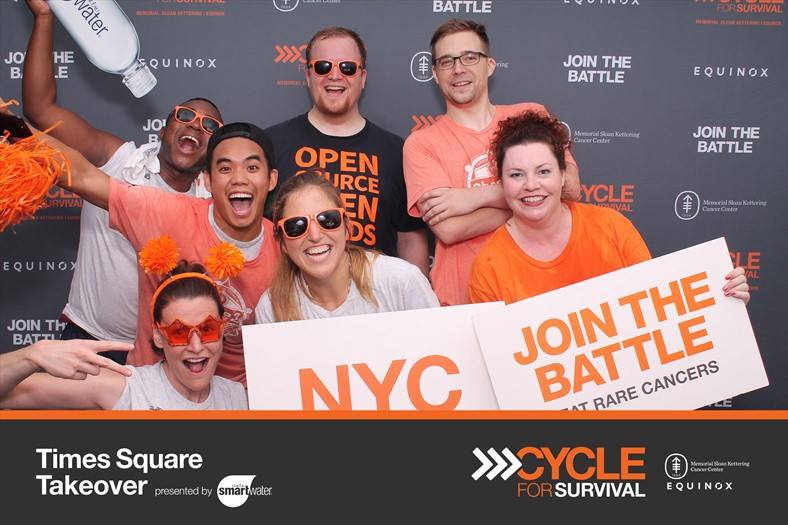
Cycle for Survival is a fundraiser for research that finds better treatments and potential cures for rare cancers. Participants raise money by riding stationary bikes found in Equinox clubs all over the U.S. The rides are also led by Equinox trainers.

This form of CSR makes sense for Equinox. While the company may not be related to cancer or the medical field, the cycling aspect of it is right up Equinox’s alley. Equinox was already well-known for its SoulCycle classes, which is just a stationary cycling class, so it already had many of the resources to take on this philanthropy. Plus, it cares about fitness, and this fundraiser gets people up and moving. All in all, Cycle for Survival is following along with Equinox’s core values.

Cycle for Survival has been extremely successful. Since its establishment in 2007, it has raised $241 million. In 2020 alone, there will be 37,500 participants across 17 cities in the U.S. Those are not small numbers!

The movement also receives a lot of news coverage, which is due to many different factors. Because of Equinox’s A-list customer base, celebrities have joined the movement. Additionally, big brands like smartwater, New Balance, and Tag Heuer have partnered with Cycle for Survival. It even holds one of its cycling events in the middle of Times Square in New York. All of this adds up to make for a very successful CSR choice by Equinox.

The Heroes Project

Image from Goodfellow Air Force Base

The Heroes Project (THP) is a nonprofit that raises money to “create training and expedition programs” for military veterans who have sustained serious physical injuries. Learn more about their cool mission here.

Like with Cycle for Survival, this philanthropic CSR works for Equinox, including its core values of fitness and health. THP is all about strengthening your body to climb mountains, backpack, and “push the boundaries of what’s possible” (from their quote earlier).

Equinox trainers work with the veterans to get them physically fit for their expedition in, of course, Equinox clubs. The fundraisers that are held by Equinox include both cycling (much like Cycle for Survival) and climbing mountains.

However, this movement doesn’t have nearly as much news coverage. They also don’t have any numbers on their website of how much has been fundraised, which is quite different from Cycle for Survival. It still looks just as professional, but it’s clear that THP is not as big in terms of media coverage and engagement.


THP needs a bit more work in terms of getting the word out, but all in all, Equinox has been quite successful at their CSR. This work follows its company values. Equinox is known for its work with these philanthropies. It has received ample news coverage. And, most importantly to me, the work that it’s doing is affecting the world in a positive way.

Equinox, I wish you would lower your membership prices, but other than that… You seem pretty cool.

A New Expectation for Fitness Clothing Brands

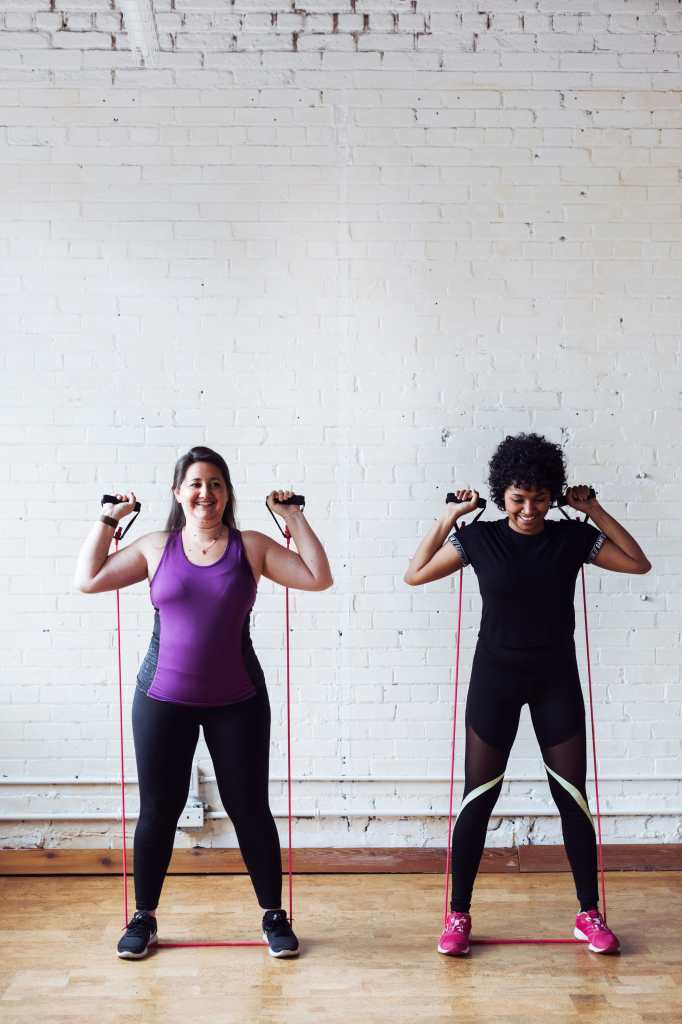
Things are changing in the fitness clothing industry. Women (for the most part, although we haven’t forgotten about you, boys!) are beginning to expect more inclusivity in their favorite activewear brands. Basically, we want to see more bodies being represented, because all different types of bodies wear athletic clothes. This includes having a wider range of sizes available and showing body-diverse models.

The first brand that comes to mind that has done this well is Fabletics. The brand had an advertising campaign recently that showed a video of a group of women of all shapes and ethnicities dancing and rocking out in their activewear, crop tops and all. Shoutout to Kate Hudson! Not only does she star in most of my favorite chick flicks from the early 2000’s, but she also co-founded this company. So, if you needed one more reason to love Kate, there you have it.

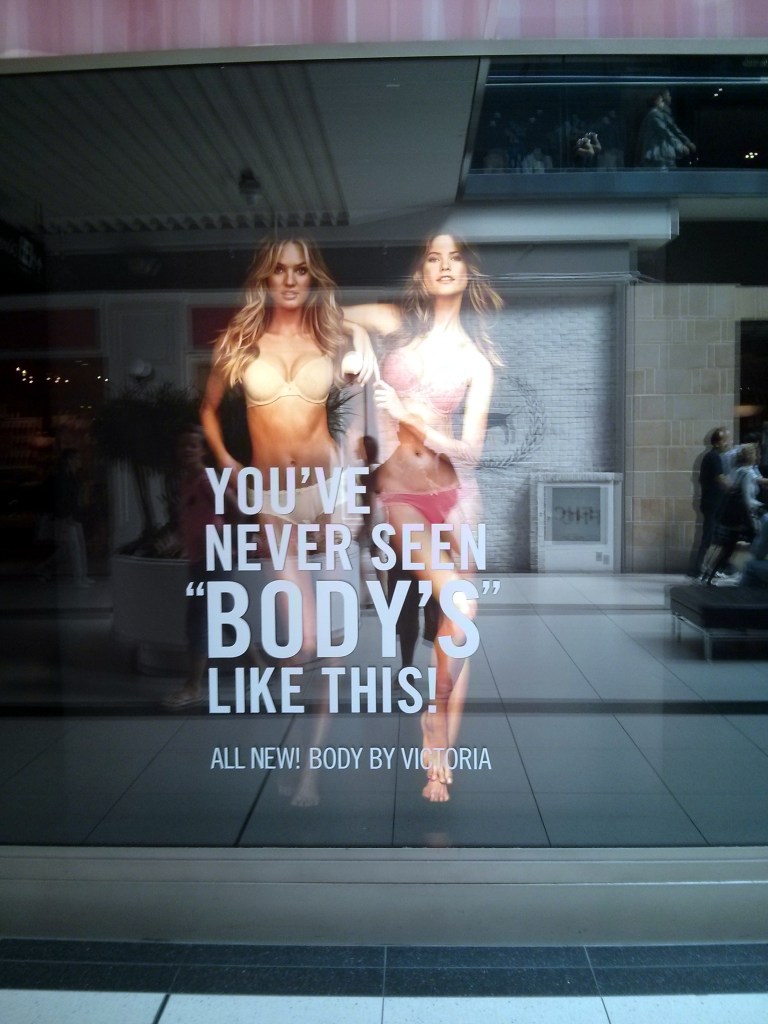
So, what will happen to brands who have not yet followed Fabletic’s lead? Well, it’s not a great public relations move to ignore these changes. Victoria’s Secret, for example, has fallen behind and is paying big time for it.

Image by Cory Doctorow on Flickr

Side note: did anyone else notice the terrible grammar mistake on this sign??

Aside from their apparent issues with punctuation, Victoria’s Secret is the perfect example of a brand that has stuck to the old ways of size triple-zero supermodels and has subsequently lost many customers because of it. Their stocks have fallen, and they’ve lost so much of their gusto that they called off their famous fashion show last year.

People are starting to notice other brands who haven’t caught up to speed yet, either. I actually overheard a couple women talking about Lululemon the other day and how disappointed they are that the brand doesn’t show more body diversity in its’ models and advertising campaigns.

The truth is, if athletic-wear companies don’t want to fall down the same hole as Victoria’s Secret, then they need some serious changes to their branding. Their PR teams need to start promoting acceptance of all body sizes, because the unrealistic expectations of women’s body types just isn’t cool anymore.

Image from Piqsels

How would a PR team do this?

  1. You’ve got to convince the whole company that this is necessary to its growth. Without a change in models and advertising, the rest of these steps will just make the company look like they’re halfheartedly trying to fit in — and consumers notice that.
  2. Start a campaign on social media that showcases your inclusivity. Post pictures of models with all kinds of bodies. Tell stories from customers who love the brand because of its diversity. Don’t forget: a good story can go a long way.
  3. Have a press release describing your changes. There’s no need to do this silently — let consumers know that you’re making big waves!
  4. Write pitches about your new brand to reporters. Specifically, you want to choose reporters who have shown an interest in clothing brands or diversity.

While I whole-heartedly believe in the importance of a healthy lifestyle, even I can’t say that I will ever look like one of those models. It’s simply unattainable for the majority of people. And, a brand wants the majority of people to buy their products, in comparison to its competitors. Make those people feel more welcome and accepted, and boom goes the dynamite. You’ve just upped your game, raised your profits, and became a bigger competitor.

A Great Nonprofit? I’m Here for It.

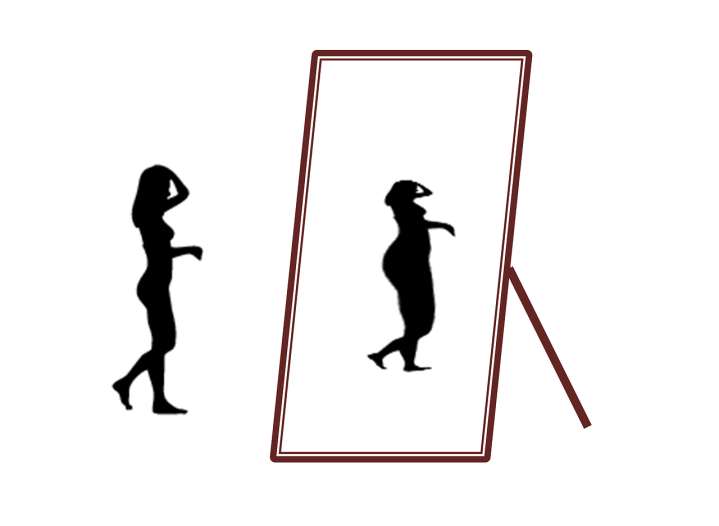
We love a great nonprofit! The National Eating Disorders Association (NEDA), deals with a national crisis that I hold close to my heart, especially in terms of wellness. Eating disorders are no joke, and the pressure from beauty standards have left far too many people struggling with one… or two or three. Sometimes, in the process of trying to become healthier through exercise and healthful eating, we become more focused on the appearance of our bodies rather than all of the other positive benefits.

From Needpix.com

Unfortunately, the fitness industry has played a huge part in these national beauty standards, among many other contributors. While I am all about going to the gym and workin’ on my fitness (as Fergie would say), the media has created this idea that working out and eating healthy will eventually result in the body of a model. For most bodies, this is just not true, unless you dedicate your life to the gym.

And who’s got time for that?

I sure don’t. But these beauty/body standards… They affect us deeply. And that’s why 20 million women and 10 million men in the U.S. will find themselves dealing with an eating disorder.

This is why we need great organizations like NEDA. They’re the largest nonprofit in the eating disorder community, and their mission is to rid the world of these tough mental illnesses through providing support and raising awareness.

Why did I choose NEDA?

Because they are reminding the world of something very important: The stereotypes around eating disorders just aren’t true.

At the forefront of our awareness building is a focus on removing the stigma and the stereotypes surrounding eating disorders and on sending a message that people of all sizes, races, genders, sexual identities, abilities, and in any socioeconomic status can struggle are deserving of care.

NEDA

NEDA wants everyone with an eating disorder, no matter who they are, to feel welcome and cared about. No wonder they have been so successful. They have a helpline that anyone can call, and they also do instant messaging! And, they have an online screening tool for people ages 13 and up (how cool is that?) that will let them know if they should be seeking professional help. In 2018, they had over 14,000 contacts on their helpline, and over 230,000 completed screenings.

They have held regional conferences that open up discussion about eating disorders to those who are in recovery or currently going through it. In 2018, they advocated for increased federal funding for research on eating disorders, and got $5 million put towards it!

They are helping so many people, guys. This just makes my heart so happy. There are resources out there, and people who have dedicated their lives to this cause.


If you or someone you know is going through an eating disorder, please check out NEDA’s website here. You can also call their helpline at (800) 931-2237 or chat with someone online here.